
The Parent's Guide to Kids Tennis in North Ryde
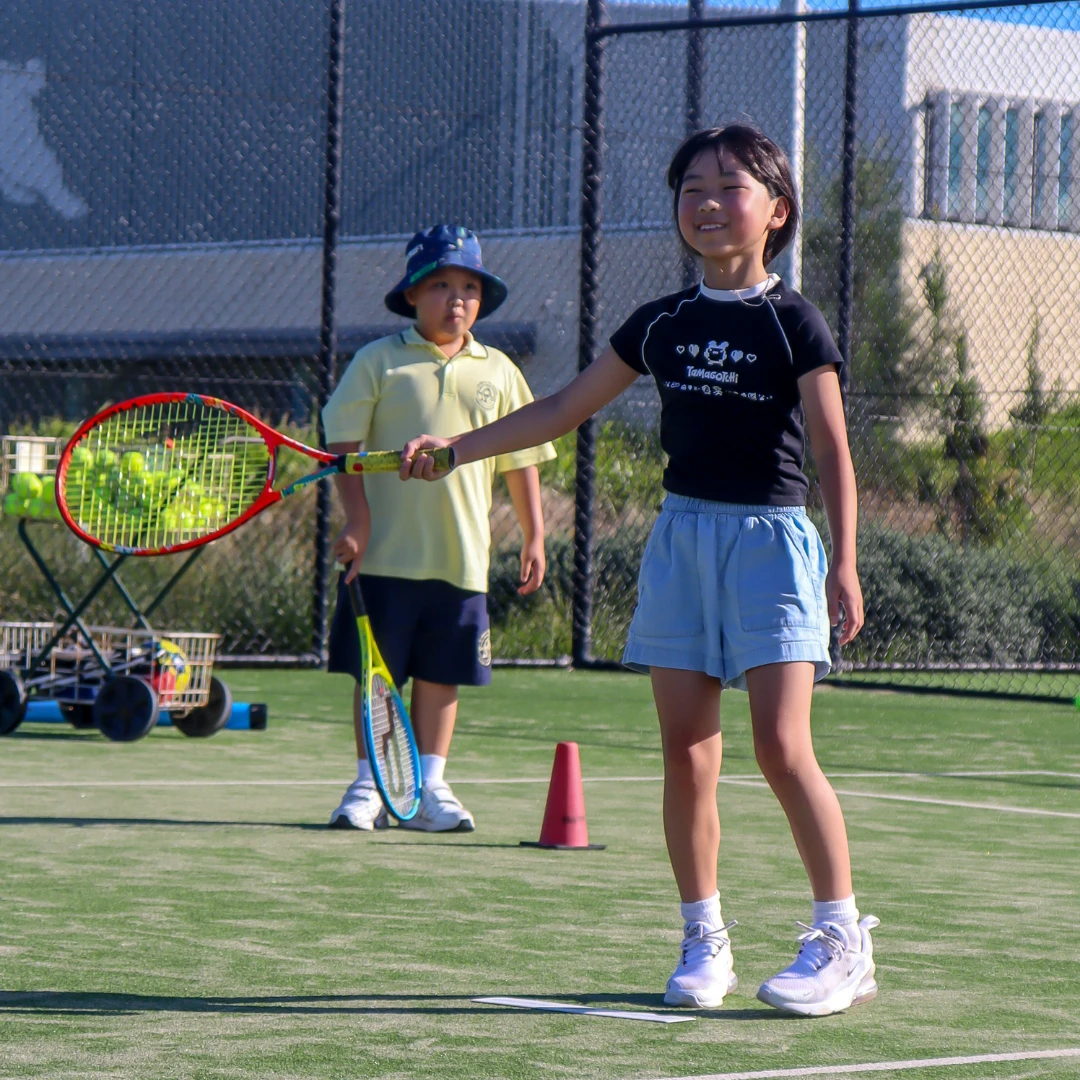
If you're weighing up tennis as your child's first sport, or wondering whether to add it alongside something they already do, this guide covers what actually matters: the real benefits, the right age to start, how tennis compares to other sports, what a first lesson looks like, and how to keep them motivated once they're in.
Table of Contents
- Why tennis is such a good first sport for kids
- What age should my child start?
- Tennis vs other sports
- Is tennis good for shy kids?
- What to expect at your child's first tennis lesson
- What should my child wear?
- Keeping kids motivated
- Tennis etiquette for kids
- What our coaches have seen work for hesitant first-timers
- Summary
- FAQ
- Next steps
Why tennis is such a good first sport for kids
Tennis develops what sport scientists call physical literacy: the skills, knowledge, and confidence a child needs to stay active for life. The Australian Sports Commission frames physical literacy across four areas, physical, psychological, social, and cognitive, and tennis touches all four in a single session, especially within a structured framework like Tennis Australia's Hot Shots program (Australian Sports Commission, Physical Literacy; Tennis Australia, Hot Shots).
On the physical side, tracking and hitting a moving ball builds hand-eye coordination and gross motor skills quickly, since a child gets constant, immediate feedback (the ball either goes where they wanted or it doesn't). Socially, even non-contact individual sports like tennis build turn-taking, fair play, and communication, especially in the group-class format most kids start in. Cognitively, kids start problem-solving almost immediately: where to stand, when to move, how to adjust to a ball that bounced differently than expected. And because tennis is genuinely a lifelong sport, played competitively or socially well into adulthood, the skills a child builds at 5 don't have an expiry date the way some more physically demanding youth sports do.
What age should my child start?
Most children can start structured tennis from around age 3, through play-based programs that build coordination and confidence before any real ball skills come into it. There isn't one single "correct" age, readiness varies a lot between individual kids, and a good program will meet your child wherever they're at. We've written a full guide to this exact question, including the specific age stages we use, in What Age Should Kids Start Tennis Once they're enrolled, our Kids Tennis Stages Explained guide covers how they'll progress from there.
Tennis vs other sports
Parents often ask how tennis stacks up against something like swimming, since both are common first-sport choices. The honest answer is that they're not really competing for the same job. Swimming is a foundational safety skill first and a sport second, every child benefits from learning to swim regardless of what else they do. Tennis is more about coordination, strategy, and social play, and it doesn't require the same early safety urgency.
The Australian Sports Commission's physical literacy framework actually encourages trying multiple sports rather than picking one early and sticking to it exclusively, since different sports build different combinations of physical, social, and cognitive skills. Plenty of families do both: swimming lessons for the safety fundamentals, tennis for the coordination, strategy, and social side. Neither has to come at the expense of the other.
Is tennis good for shy kids?
Yes, often surprisingly so. Tennis is an individual sport at its core, so there's no risk of a shy child feeling exposed for missing a pass or letting a team down, the pressure that team sports can create for reserved kids simply isn't there in the same way. At the same time, group Hot Shots classes are structured and predictable, which tends to suit shy children better than more chaotic, free-form group activities. Coaches also naturally build in partner drills and rotations, which give shy kids low-pressure ways to interact with other kids without the social intensity of a team environment.
What to expect at your child's first tennis lesson
First sessions are deliberately low-pressure. A coach will typically place your child in the right starting stage based on age and a quick read of their coordination and confidence on the day, rather than any formal test. Expect games and movement-based activities rather than drilling, especially for younger kids, the goal of a first lesson is comfort on court, not technique.
Most kids need a session or two to settle in, especially if they've never been in a structured class environment before. It's completely normal for a first-time 4-year-old to spend more time watching and warming up to the group than actively participating, and coaches are used to easing kids into our Hot Shots classes at their own pace.
What should my child wear?
Comfortable, breathable sports clothing and enclosed shoes are the only real requirements for a first session, and most young kids don't need anything more specialised than what they'd wear to any other active class. A properly sized racquet matters more than clothing (an adult racquet is too heavy and long for a small child to swing safely), and loan racquets are typically available for trial sessions, so there's no need to buy equipment before you know your child enjoys it. Once they're enrolled regularly, a coach can advise on the right racquet length for their age and height.
Keeping kids motivated
Motivation in the early stages comes far more from enjoyment than from technique or results. A few things that reliably help: matching the pace of lessons to your child rather than pushing for faster progression, celebrating effort and small wins rather than only wins on the scoreboard, and giving them something social to look forward to, whether that's a friend in the same class or a goal like a future Hot Shots Challenge gala day. Watching a small amount of tennis together, even casually, can also build genuine interest rather than just compliance with "it's tennis day."
Tennis etiquette for kids
Basic etiquette is worth introducing early, since it's part of what makes tennis a genuinely social sport rather than just a physical one. The essentials for young players: calling the ball in or out honestly even when it costs you the point, waiting your turn without interrupting a rally in progress, congratulating an opponent regardless of the result, and taking care of shared equipment and court space. Coaches reinforce these naturally through group class structure, but reinforcing the same expectations at home helps them stick.
What our coaches have seen work for hesitant first-timers
In our experience coordinating Hot Shots at Ryde Multisport & Racquet Centre, the kids who struggle most in a first session are almost never the ones with the least coordination, they're the ones who feel like they're being watched and judged. What actually helps is keeping the first session low-stakes for the parent too. Our coaches have seen plenty of nervous 4- and 5-year-olds go from clinging to a parent's leg in week one to confidently running onto court by week three, simply because nobody made a big deal out of the slow start. If your child is hesitant at first, that's normal, not a sign tennis isn't for them.
Summary
Tennis builds physical literacy across physical, social, and cognitive domains in a single sport, and it's a genuinely lifelong activity rather than one with a use-by date. Most kids can start from around age 3, it suits shy kids better than many parents expect, and a first lesson is built to be low-pressure rather than a test. Motivation comes from pacing lessons to your child and celebrating effort, and basic etiquette (honesty, patience, good sportsmanship) is worth reinforcing early and at home.
FAQ
What are the benefits of tennis for kids?
Tennis builds hand-eye coordination and gross motor skills, social skills like turn-taking and fair play, and problem-solving through constant in-the-moment decisions, while being a sport kids can keep playing for life.
What age should my child start playing tennis?
Most children can start from around age 3 through play-based programs. Readiness varies by child, see our full guide on what age kids should start tennis for the specific age stages we use.
Is tennis good for shy kids?
Yes. As an individual sport with structured, predictable group classes, tennis tends to suit shy children better than more chaotic team environments, without the social pressure of letting a team down.
How do I know if my child is ready for tennis?
If your child can catch or throw a ball reasonably, follow simple instructions, and shows interest in running or hitting games, they're likely ready to try a class. A trial session is the best way to confirm.
What should my child wear to their first lesson?
Comfortable, breathable sports clothing and enclosed shoes. No specialised gear is required for a first session, and loan racquets are typically available.
Is tennis good exercise for kids?
Yes. Tennis combines cardiovascular activity, coordination work, and quick directional movement, making it a well-rounded form of exercise for children.
How does tennis compare to swimming for kids?
They're complementary rather than competing. Swimming is a foundational safety skill every child benefits from, while tennis builds coordination, strategy, and social skills. Many families do both.
How do I prepare my child for their first tennis lesson at Tennis World North Ryde?
Dress them in comfortable sports clothing, arrive a few minutes early, and keep expectations low-key. Coaches will place your child in the right stage and ease them into the group on the day.
How can I keep my child motivated to keep playing tennis?
Match lesson pace to your child, celebrate effort over results, and give them something social to look forward to, whether that's a friend in class or a future Hot Shots Challenge gala day.
What tennis etiquette should my child know?
Calling the ball in or out honestly, waiting their turn without interrupting a rally, congratulating opponents regardless of the result, and taking care of shared equipment and court space.
Next steps
The best way to find out if tennis is the right fit is to get your child on court. Book a free trial Hot Shots session at Ryde Multisport & Racquet Centre and our coaches will take it from there. NSW families can also apply the $50 Active Kids Voucher toward enrolment.
Ryde Multisport & Racquet Centre Coaching Team
Hot Shots Program, Ryde Multisport & Racquet Centre
Our Hot Shots coaching team is Tennis Australia accredited and works with junior players across the full skill range, including those with significant UTRs (Universal Tennis Ratings). Guidance in this article reflects the team's day-to-day experience introducing new families to the sport, including first-time and hesitant beginners.