
What Age Should Kids Start Tennis? A Parent's Guide to Getting Started
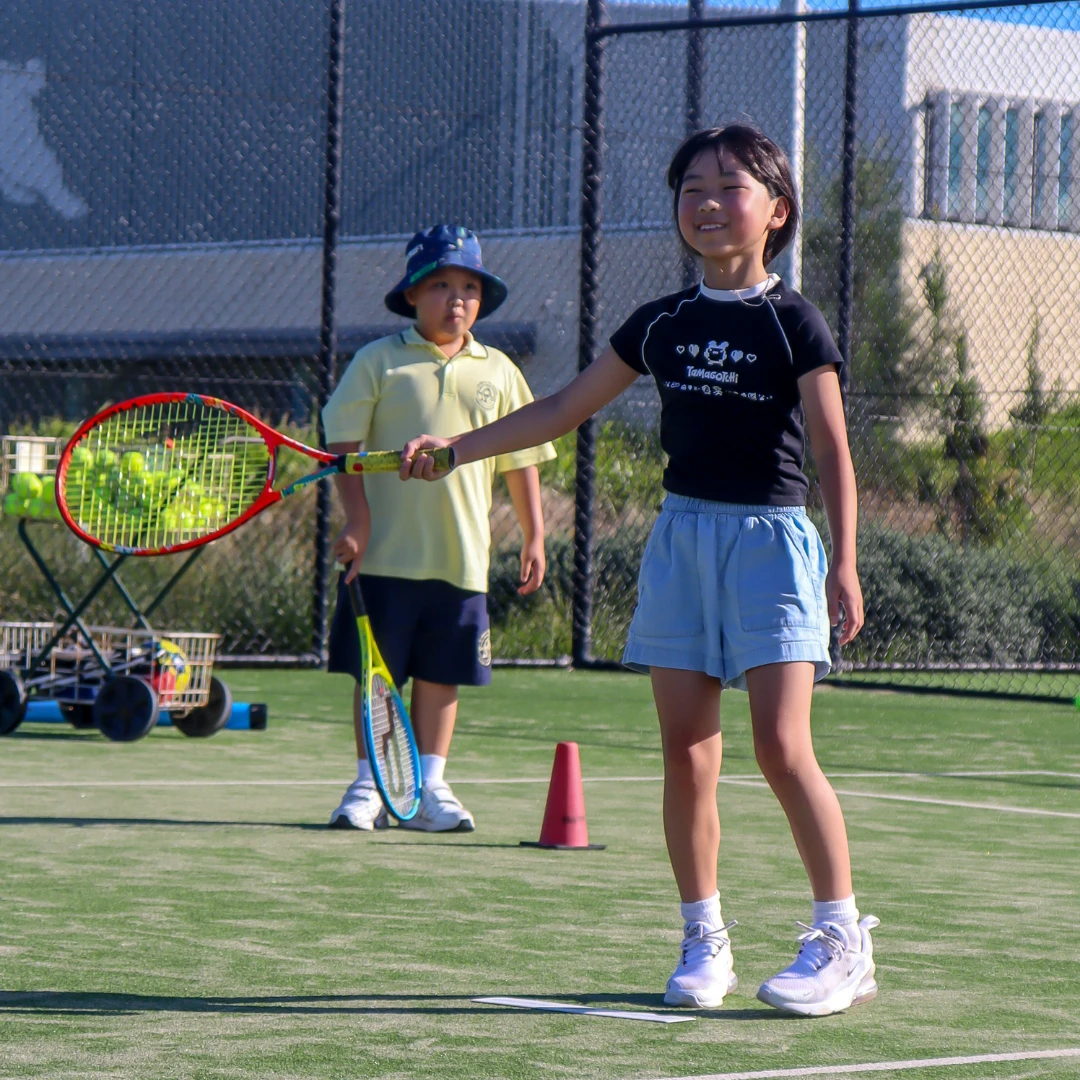
If you've typed "what age should kids start tennis" into Google at 9pm after your child pointed at a tennis court and said "I want to try that," you're not alone. It's one of the questions we get asked most often at Ryde Multisport & Racquet Centre. The short version: most kids can start structured tennis from around age 3 to 5, but "ready" looks different for every child, and the right starting point depends more on temperament and coordination than on a birthday.
This guide walks through the readiness signs to look for, what tennis actually looks like at each age stage, the mistakes we see parents make most often, and how to get your child started without overthinking it.
Table of Contents
The short answer
Tennis Australia's national junior framework, Hot Shots, is designed for children from age 3 through 10+, using scaled-down courts, lighter racquets, and softer, slower-bouncing balls at each stage so the game is physically achievable for small bodies (Tennis Australia, Hot Shots). Internationally, coaching guides echo the same range, with most experts pointing to 5 to 7 years old as the age where children typically have enough coordination, concentration, and rule comprehension to get the most out of structured lessons, while noting that plenty of 3- and 4-year-olds thrive in play-based introductory programs too (Babolat, tennis age guide).
In other words: there's no single "correct" age. There's a correct stage for your child, and a good program will meet them there.
Signs your child is ready for tennis
Rather than fixating on age, look for these readiness signs, which line up with typical gross motor and attention-span milestones for preschool and early-primary-aged children (Kid Sense Child Development, gross motor developmental chart):
- Can catch and throw a large ball, even inconsistently: this is the foundation for tracking and hitting a moving tennis ball.
- Can follow a simple two-step instruction, like "run to the cone, then throw the ball."
- Shows interest in running, chasing, or hitting games: enthusiasm matters more than natural talent at this stage.
- Can hold attention for 20–30 minutes in a group activity (this grows quickly with practice, so don't rule out a shorter attention span, a good Hot Shots class is built around it).
- Is comfortable in a group setting away from a parent for short stretches, or happy to have a parent nearby if not.
If your child ticks two or three of these, they're very likely ready to try a class. The format of a beginner session is forgiving enough to adjust to almost any starting point.
Age-by-age guide to starting tennis
Here's what tennis actually looks like at each stage, based on the Tennis Australia Hot Shots framework used in our junior program.
Ages 3–5: Blue stage
Sessions are short (around 30 minutes), playful, and focused on movement and coordination rather than technique: think balance, chasing, and simple hand-eye coordination games using oversized, low-compression red balls and small 17–19" racquets. Most kids at this age are building the physical building blocks of the sport, not yet learning a "correct" forehand.
Ages 5–8: Red stage
This is where most kids start learning to actually rally. Sessions typically extend to 60 minutes, and children begin building basic tactics through game-based drills, still using softer, slower balls (25% compression) on a smaller court, with slightly bigger racquets (19–23").
Ages 8–10: Orange stage
Kids at this stage start developing more structured singles and doubles play, on a bigger court with a livelier ball (50% compression) and a 23–25" racquet. This is often when children who enjoy competition start asking about squads or their first gala day.
Ages 10+: Green and Yellow stages
Children transition to full-court play with a standard tennis ball (or a slightly slower green ball as a bridge), refining match play, serving, and strategy. This is also a realistic entry point for kids who haven't played before. A first-time 11-year-old isn't "behind," they're simply starting at a different stage than a first-time 4-year-old.
What we've seen on court
In our experience coaching Hot Shots at Ryde Multisport & Racquet Centre, the age question almost always matters less than parents expect. We regularly see 4-year-olds who need a full term just to get comfortable holding a racquet and running at the same time, and that's completely normal. We also see 9- and 10-year-olds walking onto a court for the very first time and picking up rallying within a few weeks, because their coordination and instruction-following are already more developed.
The pattern we watch for isn't age, it's engagement: kids who are having fun in the first two or three sessions tend to stick with it, regardless of how "behind" or "ahead" they seem compared to other kids in the class. Where we do step in and adjust is pacing: if a child is clearly not enjoying a stage (say, a 3-year-old who's overwhelmed rather than excited), we'll often suggest waiting a term or two rather than pushing through, because early frustration with a sport is far harder to undo than a short delay in starting it.
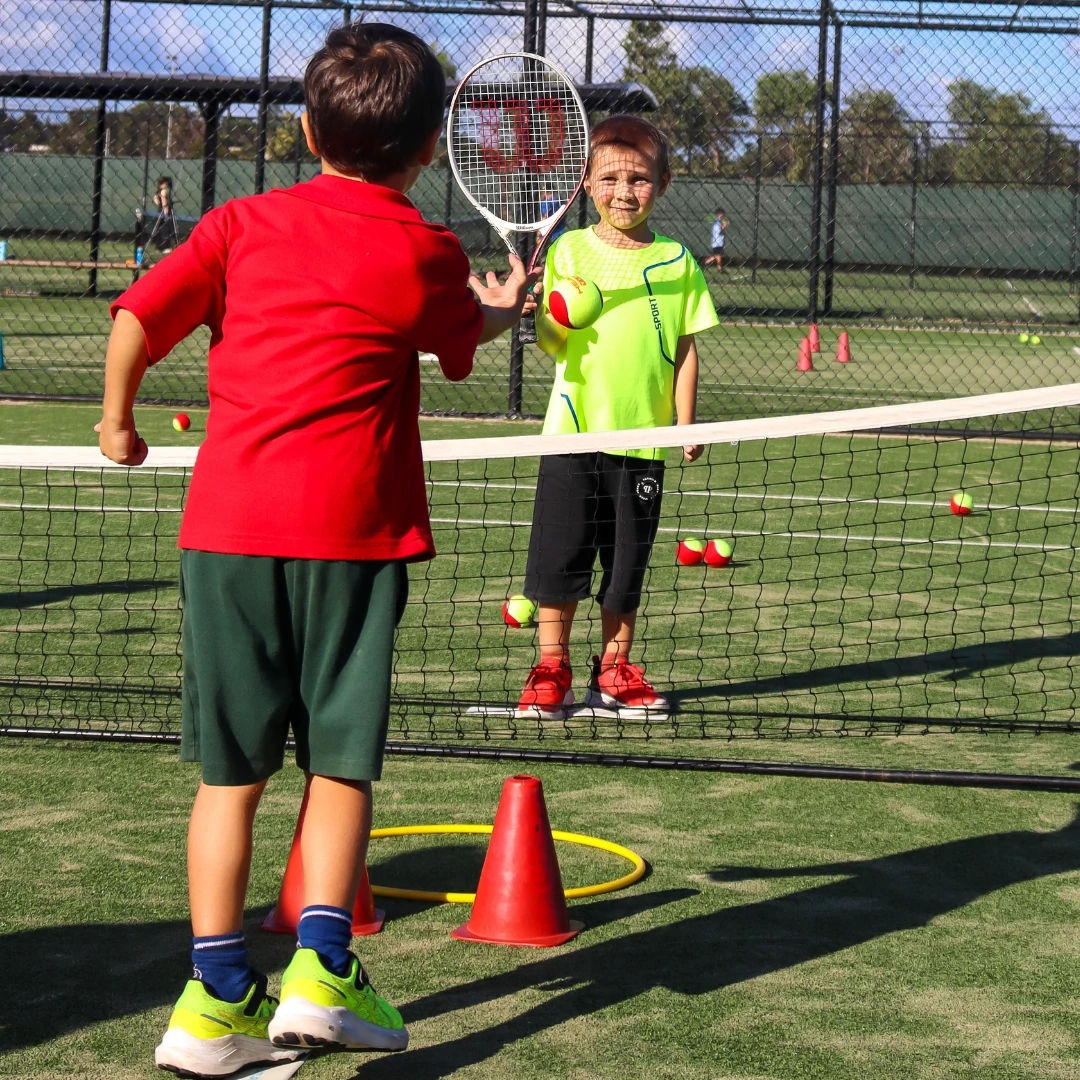
Engagement in the first few sessions matters more than a child's exact age or stage.
Common mistakes parents make
- Starting group lessons before basic coordination is there. A few private sessions or informal backyard hitting first can make that first group class far less overwhelming.
- Judging readiness by comparison to other kids, rather than by the readiness signs above. Every child's coordination and attention span develop on a different timeline.
- Buying full-size adult equipment. An adult racquet is too heavy and too long for a young child to swing safely or effectively. Age-appropriate racquets (17–23", depending on stage) make an enormous difference to a child's early experience.
- Enrolling in too many sessions too soon. One class a week is plenty for most beginners, more than that can turn an enjoyable activity into a chore.
- Assuming it's "too late" to start after age 8 or 9. Kids who start tennis in later primary school can progress quickly, especially if they already play another sport.
How to get your child started
- Watch for the readiness signs above rather than counting birthdays.
- Start with a trial class, not a term-long commitment, so your child (and you) can see how they respond before committing.
- Match the stage to the child, not the age: a mature, coordinated 4-year-old might do well jumping straight into Red stage activities, a less-coordinated 6-year-old might be happiest starting at Blue.
- Keep the first few sessions low-pressure. The goal early on is enjoyment and comfort on court, not technique.
- Reassess after a term. Most programs review and move children between stages as their skills and confidence develop.
Summary
Most children can start structured tennis from age 3, and the "right" age really comes down to individual readiness rather than a hard cutoff. Coordination, attention span, and enthusiasm matter more than the number on a birthday cake. Tennis Australia's Hot Shots framework (Blue, Red, Orange, Green/Yellow) is built around exactly this, scaling court size, ball speed, and racquet length to match a child's stage of development from age 3 through the early teens. If your child is showing interest and can catch a ball and follow a simple instruction, they're likely ready to try a class.
FAQ
What age should kids start tennis?
Most children can start from age 3 in a play-based program, with Tennis Australia's Hot Shots framework catering to ages 3 through 10+. Many coaches consider 5–7 the age where kids typically get the most out of structured lessons, but readiness varies by child.
Is 3 years old too young to start tennis?
No. Hot Shots' Blue stage is specifically designed for 3–5 year olds, using oversized foam-style balls and short sessions focused on movement and coordination rather than technique.
What is Hot Shots and how does it relate to age?
Hot Shots is Tennis Australia's national junior coaching framework, scaling equipment (ball compression, racquet length) and court size to a child's age and ability across four color-coded stages: Blue, Red, Orange, and Green/Yellow.
Can older kids (10+) start tennis for the first time?
Yes. Children starting at 10 or older typically move through the stages faster than younger beginners because their coordination and instruction-following are more developed, even without prior tennis experience.
What equipment does my child need to get started?
A correctly sized racquet for their age/height (typically 17–23" for beginners) is the main requirement. Most programs, including ours, provide loan racquets and appropriate balls for trial and early sessions.
How often should young kids practice tennis?
One weekly class is enough for most beginners aged 3–8. More frequent practice can be added once a child shows sustained interest and stamina for it.
What if my child seems uninterested in the first session?
This is common and not necessarily a sign they're "not ready." We'd usually recommend trying two or three sessions before deciding, since first-session nerves are normal, but if disinterest continues, waiting a term or two is a reasonable option.
Should I start with group classes or private lessons?
Group classes (like Hot Shots) are usually the best starting point for social, play-based learning. Private lessons can help build foundational confidence first for children who are shy in groups, or to fast-track a specific skill.
How do I know which Hot Shots stage my child should start in?
Age is the starting guide (Blue 3–5, Red 5–8, Orange 8–10, Green/Yellow 10+), but a trial session with a coach is the best way to confirm the right stage for your child's coordination and confidence level.
Is tennis a good first sport for young children?
Yes. It builds hand-eye coordination, balance, and social skills, and Hot Shots-style programs are specifically designed to make the sport achievable (not overwhelming) for very young beginners.
Next steps
The easiest way to find out if your child is ready is to see them on court. Book a free trial Hot Shots session at Ryde Multisport & Racquet Centre and our coaches will place your child in the right stage from day one.
Looking for the bigger picture beyond age? Our Parent's Guide to Kids Tennis in North Ryde covers the benefits, what to expect at a first lesson, and how to keep your child motivated once they start.
Ryde Multisport & Racquet Centre Coaching Team
Hot Shots Program, Ryde Multisport & Racquet Centre
Our Hot Shots coaching team is Tennis Australia accredited and works with junior players across the full skill range, including those with significant UTRs (Universal Tennis Ratings). Guidance in this article reflects the Hot Shots framework and the team's day-to-day experience coaching junior players across all age stages.